

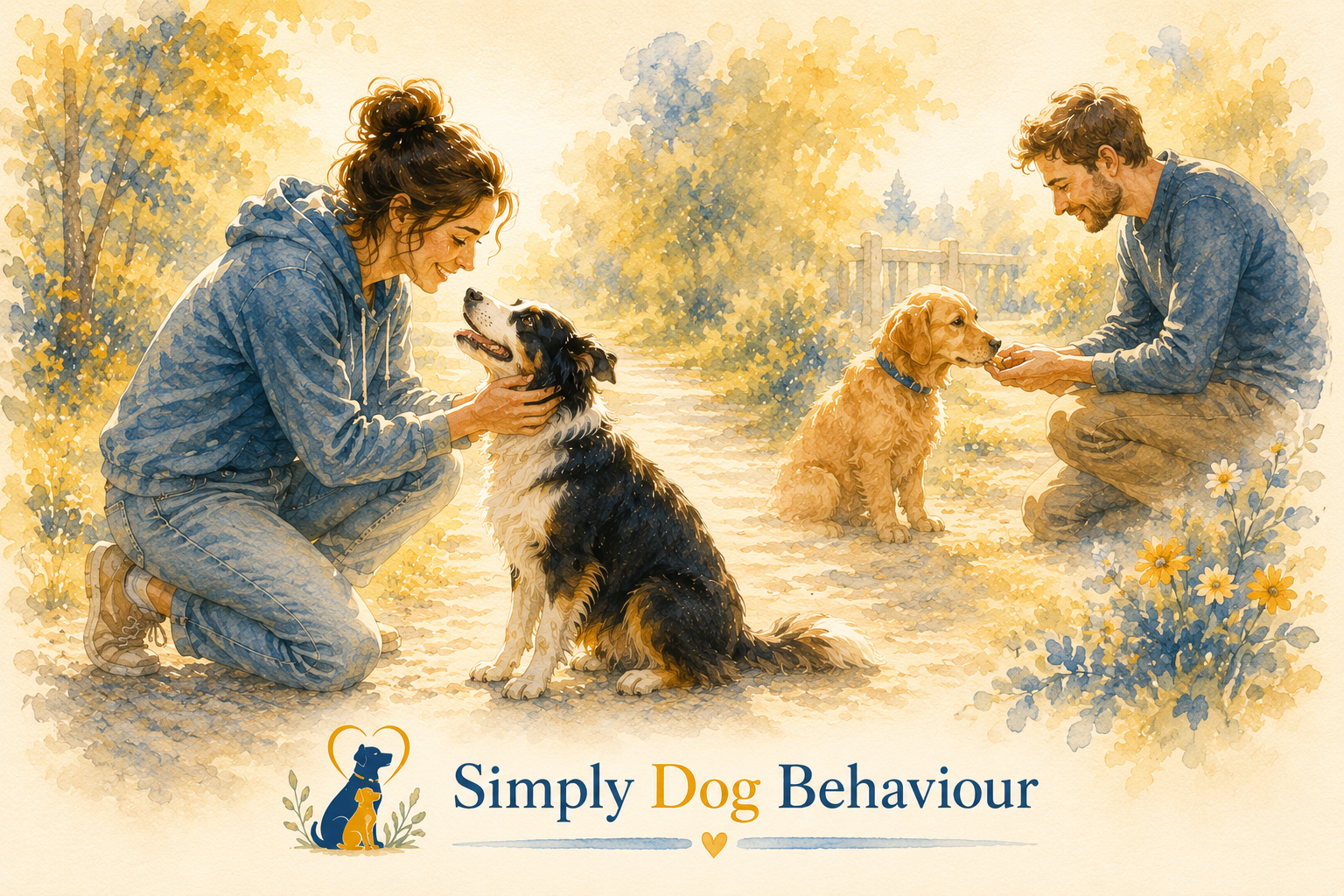
Let me ask you something. When was the last time you and your dog just connected — not during a training session, not on the way to the park, but genuinely, quietly, meaningfully? If you’re scratching your head trying to remember, you’re not alone. Most of us who share our lives with dogs are doing our absolute best. We feed them, walk them, love them. But improving your dog’s life through a better bond and meaningful connection is something that often gets overlooked — and it’s one of the most important things you can do for your dog’s wellbeing, and honestly, for yours too.
I’m Jason, a dog behaviourist with over 16 years of experience working with dogs and their families across the UK. I’ve sat in hundreds of living rooms, walked thousands of miles alongside dogs of every breed and temperament, and the one thing I’ve noticed time and time again is this: the dogs who thrive the most aren’t necessarily the ones who know the most commands. They’re the ones whose pet parents truly understand them.
That’s what this article is all about. Understanding your dog. Building something real. And improving your dog’s life in the process — starting today, with practical steps you can take right now.
What Does a Meaningful Bond Between Owner and Dog Actually Look Like?
The word “bond” gets thrown around a lot. But what does it actually mean in real, daily life?
A meaningful bond between you and your dog isn’t measured by how many tricks they can do or whether they always walk perfectly on a lead. It’s measured by how safe your dog feels in your company. How often they choose to be near you. How quickly they recover from something stressful because you’re there. How much they trust you to guide them through the world.
Think of yourself not as an owner — but as a pet parent. You’re not here to control your dog; you’re here to guide them. To help them navigate a world that, honestly, can be pretty confusing and overwhelming for a dog. That shift in mindset alone can transform your relationship.
When I work with families, I always look at the relationship first. Before we talk about behaviour, before we address pulling on lead or anxiety or reactivity — I want to know: does this dog trust their person? Because if the foundation isn’t solid, any training we layer on top will only go so far.
Why Improving Your Dog’s Life Starts With You, Not Them
Here’s something that might feel a bit uncomfortable at first: most of the changes that improve your dog’s life have to start with you.
Dogs are brilliant at reading us. They pick up on our energy, our stress, our consistency — or lack of it. If we’re tense, they feel it. If we’re inconsistent, they struggle to feel secure. If we’re always in a rush, they never get a chance to slow down and just be.
That doesn’t mean you need to be a perfect human before you can be a great pet parent. Not at all. But it does mean being a little more intentional. A little more present. A little more willing to see the world from your dog’s perspective.
The good news? Small changes make a massive difference. Let’s talk about what those look like.
How to Improve Your Dog’s Life Every Single Day: Practical Steps That Actually Work
1. Learn to Read Your Dog’s Body Language
One of the single most powerful things you can do is learn to read what your dog is telling you. Dogs communicate constantly — through their tail, their ears, the way they hold their body, the look in their eye. When we miss those signals, we miss opportunities to support them.
A dog who licks their lips when someone approaches them. A dog who yawns not because they’re tired but because they’re a bit stressed. A dog who turns their head away when you try to hug them. These are all forms of communication. And when you start to notice them and respond appropriately — stepping back, giving space, adjusting what you’re doing — your dog learns something incredibly valuable: my person gets me.
That understanding is the bedrock of a meaningful bond. It tells your dog that you’re safe to be around. That you’re paying attention. That they don’t need to escalate to get their message across.
2. Make Time for Quality One-to-One Time
Life is busy. I completely get it. But even 10 to 15 minutes of proper, dedicated time with your dog each day — where you’re not scrolling your phone, not half-watching the telly, but genuinely present — makes a real difference.
This could be a calm grooming session. A slow wander around the garden where you let them sniff to their heart’s content. A gentle game they love. Or simply sitting together quietly in a way that feels relaxed and comfortable for both of you.
The key word here is quality. It’s not about doing more — it’s about being fully there for the time you do have.
3. Hand Feeding: One of the Simplest, Most Powerful Bonding Tools
If there’s one thing I’d recommend to almost every dog owner — especially new pet parents — it’s hand feeding. Instead of putting your dog’s entire meal in a bowl, use some or all of it to interact with your dog. Feed bits by hand. Use it during a calm training moment. Scatter it around the garden for enrichment.
Food is one of the most powerful currencies we have with dogs. When you become the source of that food — when good things come from you — your dog naturally begins to look to you more, value your presence more, and feel more connected to you. It also builds focus and creates positive associations that run deep.
We’ve written a full article on this over on Simply Dog Articles — Why Every New Puppy Owner Should Hand Feed — and honestly, it applies to dogs of all ages, not just puppies.
4. Let Them Be a Dog
This one might sound simple, but it’s genuinely one of the most important things you can do for your dog’s wellbeing: let them be a dog.
Dogs need to sniff. They need to explore. They need to roll in things we’d rather they didn’t. They need to run, dig, chew, and interact with the world on their own terms sometimes. When we restrict all of this — always rushing the walk, always pulling them away from interesting smells, always keeping them perfectly controlled — we chip away at something important.
That doesn’t mean no boundaries. Of course there are times your dog needs to focus or behave in a certain way. But balance is key. Give your dog time on walks to just sniff and explore. Let them make choices. Let them be curious. A dog who gets to be a dog is a happier, calmer, better-balanced dog. And a calmer dog is a dog who’s much easier to build a genuine connection with.
5. Use Training to Connect, Not Just Correct
Training is brilliant — but it’s most powerful when it’s used as a conversation, not a lecture. Force-free, reward-based training doesn’t just teach your dog skills; it teaches them that working with you is fun, safe, and worth it.
Short, positive training sessions — even just five minutes a day — are a fantastic way to improve your dog’s life through better bond and meaningful connection. They give your dog mental stimulation, a sense of achievement, and a reason to look to you for guidance.
One brilliant, underrated technique is adding short sit moments into your walk. It sounds small, but it genuinely shifts the dynamic between you and your dog in a powerful way. Take a look at this article: Why Adding Sits into Your Dog’s Walk Can Boost Focus, Calm & Connection — it’s a game changer for a lot of families.
6. Give Your Dog the Gift of Predictability
Dogs feel safe when they know what to expect. Predictability — consistent routines, consistent responses, consistent energy — is one of the greatest gifts you can give your dog. It reduces anxiety, builds confidence, and helps your dog feel secure in the world.
That doesn’t mean every day needs to be identical. But it does mean that your dog can broadly predict how you’re going to respond to them. That you’re not going to shout one day and laugh the next at the same behaviour. That they know roughly when walks happen, when food comes, when rest time is. That kind of consistency is incredibly grounding for a dog — and it’s a cornerstone of a meaningful, trusting relationship.
7. Choose Calm Over Drama
When things go wrong — and they will, because dogs are dogs — your response matters enormously. The calmer you stay, the calmer your dog learns to be. Shouting, yanking, dramatising a situation all spike your dog’s stress levels and erode trust over time, even if you don’t mean them to.
Instead, aim for calm, clear guidance. Remove your dog from situations that are beyond them right now. Support them rather than correct them. Ask yourself: “Would I handle a two-year-old child this way?” Dogs need the same calm, patient, understanding guidance that we’d give to any family member who was finding something hard.
The calmer you are, the safer your dog feels. And the safer they feel, the stronger your bond becomes. It really is that connected.
The Link Between Bond, Behaviour, and a Better Dog-Owner Relationship
Here’s something I see again and again with the families I work with: when the bond improves, the behaviour improves. Not always immediately, not always dramatically — but consistently, over time, things get better.
A dog who trusts their pet parent is less likely to be reactive, because they feel less need to manage threats on their own. A dog who feels genuinely connected to their person is less likely to bolt or ignore recall, because coming back to you means something. A dog who knows they’re safe and understood is less likely to struggle with anxiety and stress-related behaviours.
This isn’t to say that bond is a magic cure for every behaviour issue — sometimes there are underlying factors that need specialist support. But it is the foundation that everything else gets built on. Get the relationship right, and you have a platform that makes every other challenge easier to address.
Improving Your Dog’s Life When Things Are a Bit Rocky: Reactivity, Anxiety, and Difficult Behaviour
For some of you reading this, life with your dog is genuinely hard right now. Maybe they’re reactive on lead. Maybe they struggle with anxiety. Maybe walks have become something you dread rather than enjoy. If that’s you, firstly — I hear you. It’s exhausting. And it can feel really lonely.
But I want you to know that improving your dog’s life and rebuilding that connection is absolutely possible, even when things feel difficult. In fact, especially then — because working through challenges together is one of the most bonding experiences a pet parent and dog can share.
If you’re dealing with a reactive dog, I’ve put together a dedicated guide that walks you through understanding what’s really going on and what to do about it. You can grab the Reactivity PDF here — it’s packed with practical, real-world advice that I give to families I work with directly.
The key with difficult behaviour is always to go back to the relationship. Remove the pressure. Build the trust. Take it back to basics. When your dog knows you’re on their side — not against them — everything starts to shift.
Building a Bond From the Start: Puppies and Pet Parenting Done Right
If you’ve got a puppy or are thinking about getting one, you’re in an incredibly exciting position — because you have the opportunity to build this relationship from day one, on the right foundation.
The early weeks and months with a puppy are so important. Not just for toilet training and socialisation — but for building a bond that will shape your dog’s entire life. The way you handle your puppy, the way you guide them, the way you respond to them during those early experiences — all of it is laying down the roots of the relationship you’ll have for years to come.
I’ve created a 30 Day Puppy Plan specifically to help new puppy families navigate those crucial first weeks with confidence and calm. It takes you through everything step by step, with the bond and your puppy’s wellbeing at the heart of it.
And if you want a comprehensive, warm, practical guide to the whole puppy journey, my book — available on Amazon — covers everything from bringing your puppy home to navigating the adolescent phase, all through the lens of connection, understanding, and force-free guidance.
Small Daily Habits That Improve Your Dog’s Life in Big Ways
Let me give you a quick, practical checklist of things you can start doing today — small habits that, over time, build a profoundly better life for your dog and a stronger bond between you:
Notice and respond to your dog’s communication signals — when they look uncomfortable, give them space. When they seek you out, meet that moment warmly.
Spend 10 minutes of fully present, undivided time with your dog daily — no phone, no distractions. Just you and them.
Hand feed at least part of their meals — use food as a bonding tool, not just fuel.
Allow sniff time on walks — slow down, let them explore, don’t rush the experience. A dog who gets to sniff is a mentally satisfied dog.
Keep training sessions short, positive and fun — end on a win. Make working with you the best part of their day.
Be consistent in your responses — your dog is always learning from you. What are you teaching them about how predictable and safe you are?
Stay calm in challenging moments — your dog is looking to you for information. Show them the world is manageable.
Celebrate the small things — your dog did something brilliant today, even if it was tiny. Mark it. Reward it. Let them know.
None of these are complicated. None require special equipment or a huge time commitment. But they are profoundly meaningful to your dog — and they compound over time into something really special.
Understanding Your Dog Is the Greatest Investment You’ll Ever Make
When people come to me for help, they often expect me to fix their dog. And I always gently redirect that — because the best outcomes I’ve ever witnessed haven’t come from fixing a dog. They’ve come from helping a pet parent truly understand theirs.
When you understand your dog — when you know what they’re communicating, what they find hard, what lights them up, what makes them feel safe — you stop seeing them as a problem to be solved and start seeing them as a living being whose life you have the extraordinary privilege of shaping.
That shift changes everything. It changes how you respond in difficult moments. It changes the energy you bring to your walks. It changes what you prioritise. And it absolutely changes your dog’s day-to-day experience of life.
Improving your dog’s life through a better bond and meaningful connection isn’t a luxury. It’s not an extra. It’s the whole point.
Get Your Free Guide: Simple Ways to Start Building a Better Bond Today
If you’d like some practical help getting started, I’ve put together a free guide that walks you through the basics of building a calmer, more connected relationship with your dog. It’s simple, it’s straightforward, and it’s completely free.
👉 Grab your free guide here and start making a real difference to your dog’s life today.
Ready to Take the Next Step? Work With Simply Dog Behaviour
If you’re ready to go deeper — if you want to understand your dog on a level that genuinely transforms your relationship — I’d love to help you. At Simply Dog Behaviour, I work one-to-one with pet parents and their dogs across the UK, taking a calm, force-free, science-based approach that puts your dog’s wellbeing and your relationship at the centre of everything we do.
Whether you’re dealing with reactivity, anxiety, adolescent challenges, or simply want to build a deeper, more meaningful bond with your dog — there’s support available for you. Head over to www.simplydogbehaviour.co.uk to find out more and get in touch.
Your dog deserves a life filled with understanding, connection, and genuine happiness. And so do you.
Jason Devereux is a professional dog behaviourist with over 16 years of experience. He is the founder of Simply Dog Behaviour, based in the UK, and is passionate about helping pet parents and their dogs build genuine, lasting connections through force-free, science-based guidance.
Thank you for your help, guidance and support.
Our dog is truly the greatest investment we ever made and you never fail to understand the problem and help to guide us in the right direction
Many thanks again